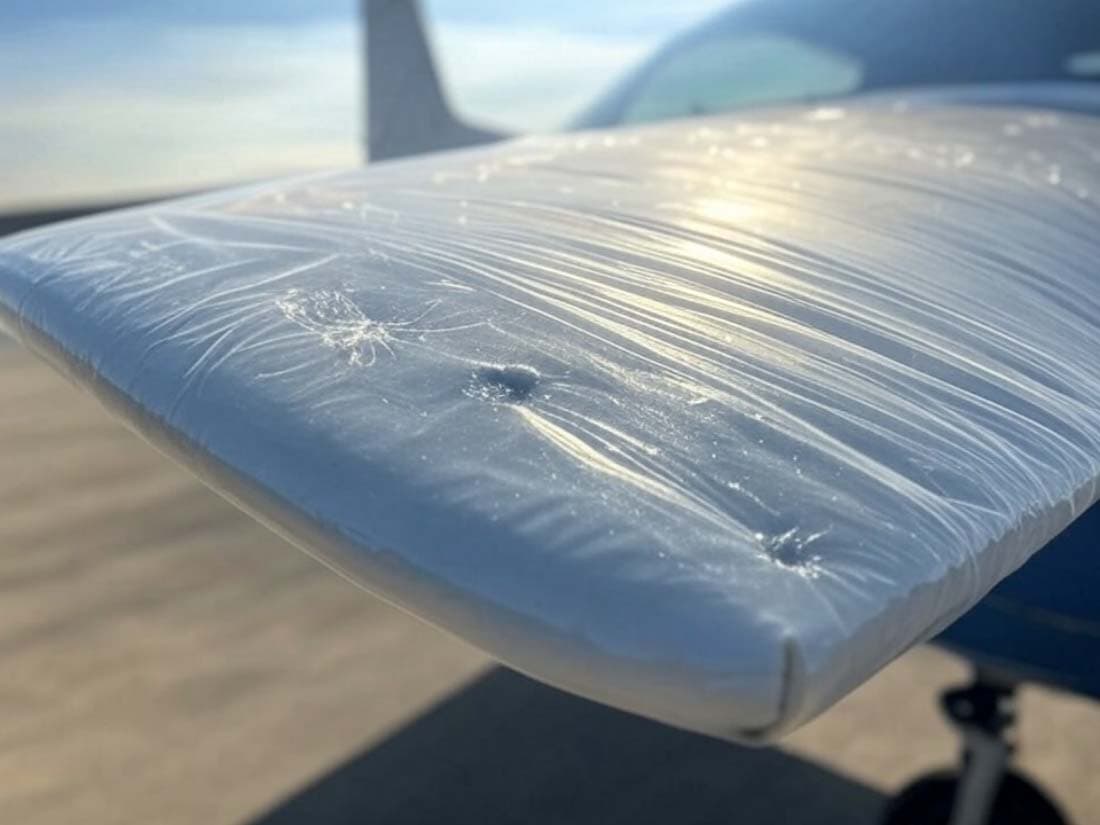
Seal Healing Honeycomb Material
1 / 2
Autoplay active • - Use arrow keys ← →
Self-Healing Hull Specification
Overview:
- Purpose: To create a ship hull capable of autonomously repairing minor to moderate damage, enhancing durability, and reducing maintenance costs.
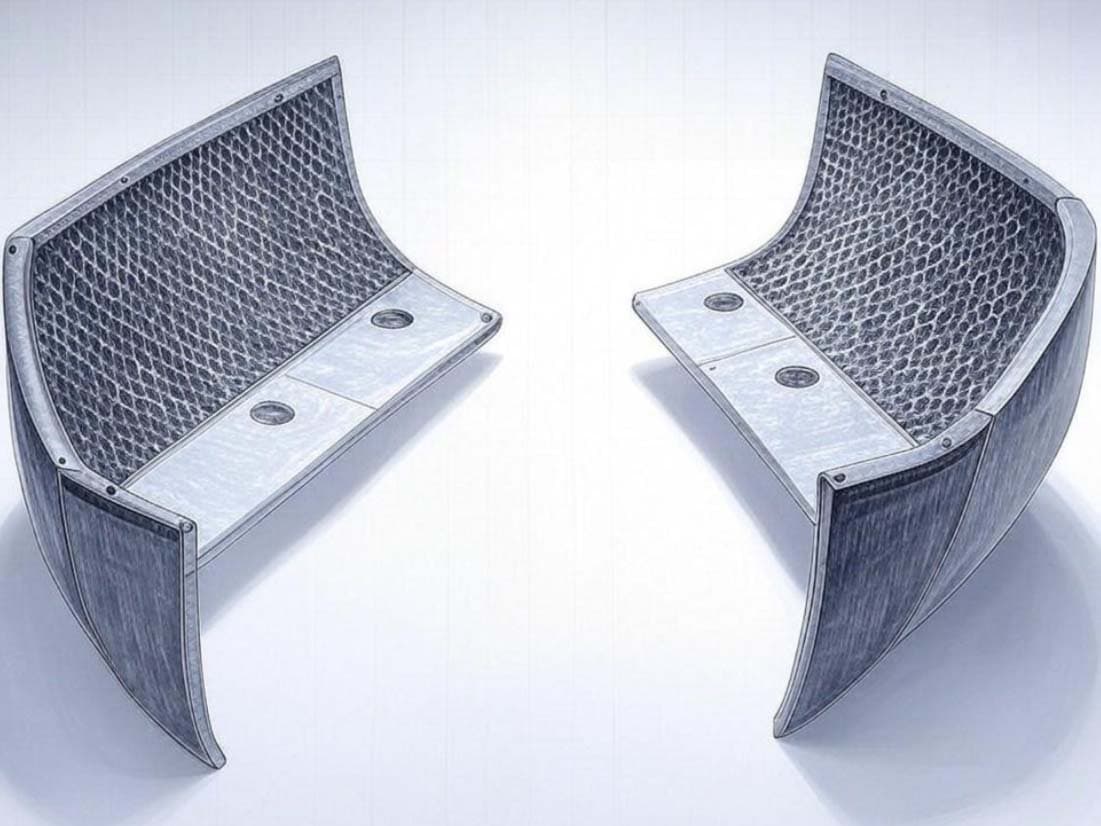
- Design Concept: A composite structure where a honeycomb core is sandwiched between two layers of protective skins, with the core filled with a self-healing gel.
Structural Components:
-
Outer Skin:
- Material: High-strength, which provides resistance to impacts, corrosion, and UV radiation.
- Thickness: variable.
- Features:
- UV protection coating.
- Anti-fouling treatment to prevent marine growth.
-
Inner Skin:
- Material: A lighter, less rigid composite, such as carbon fibre reinforced polymer, to maintain structural integrity while allowing flexibility for the self-healing mechanism.
- Thickness: variable.
- Features:
- Sound and thermal insulation properties.
-
Honeycomb Core:
- Material: lightweight strength and rigidity.
- Cell Size: 6-10 mm per cell to balance weight with strength.
- Height: 20-30 mm.
- Purpose: Provides structural support while housing the self-healing gel.
-
Self-Healing Gel:
- Composition: A polymer-based gel with microcapsules containing healing agents (like dicyclopentadiene) and catalysts (like Grubbs' catalyst). When damage occurs, the capsules break, releasing the chemicals to polymerize and heal the breach.
- Properties:
- Non-toxic, marine-safe.
- Temperature and pressure resistant.
- Gel should be viscous enough to stay in place but not so much that it clogs or leaks from minor punctures.
Self-Healing Mechanism:
- Trigger: Mechanical damage or pressure change causing microcapsules to rupture.
- Process: Upon breach, healing agents mix and polymerize, filling and sealing the damage. This process can be accelerated with slight heating or pressure change.
- Efficiency: Expected repair for minor to moderate damage (up to 15 mm diameter holes) within 24 hours under optimal conditions.
Installation and Maintenance:
- Installation:
- Layering process in a controlled environment, ensuring no air or moisture is trapped between layers.
- Gel infusion must be precise to avoid over or under-filling cells.
- Maintenance:
- Regular checks for the integrity of both skins and the functionality of the gel using non-invasive diagnostic tools like ultrasound or infrared imaging.
- Potential replacement or re-infusion of gel if significant degradation or depletion occurs.
Testing and Validation:
- Lab Tests: Impact resistance, puncture tests, cyclic fatigue, environmental exposure.
- Field Tests:
- Real-world application on small vessels before full-scale implementation on larger ships.
- Monitoring with sensors embedded in the structure for real-time performance data.
Environmental Considerations:
- End-of-life: Considerations for recycling or disposal of the materials, focusing on the environmentally friendly decomposition of the gel and composites.
Patent and Intellectual Property:
- Research and Development: Ensure all materials and processes are either patented or the use is licensed appropriately to avoid infringement.
Tags
#self healing hull#honeycomb structure#special gel#dual skin#composite materials#graphene#carbon fiber#polymer
Quick Info
Category
MaterialsDate
February 2025
Key Technologies
self healing hullhoneycomb structurespecial geldual skin
Interested in this invention?
Get in touch to learn more or discuss collaboration opportunities.
Contact Us