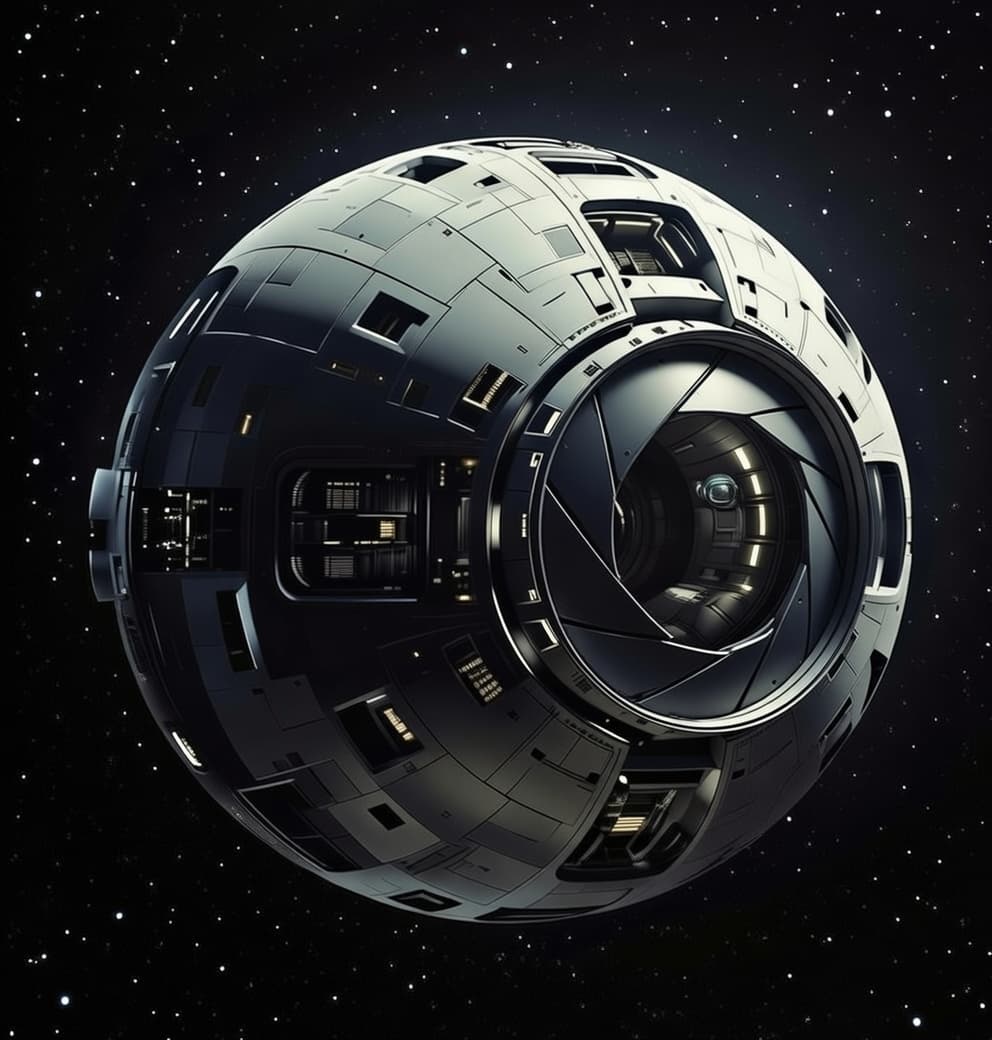
Dipole Magnetic Shield Generator
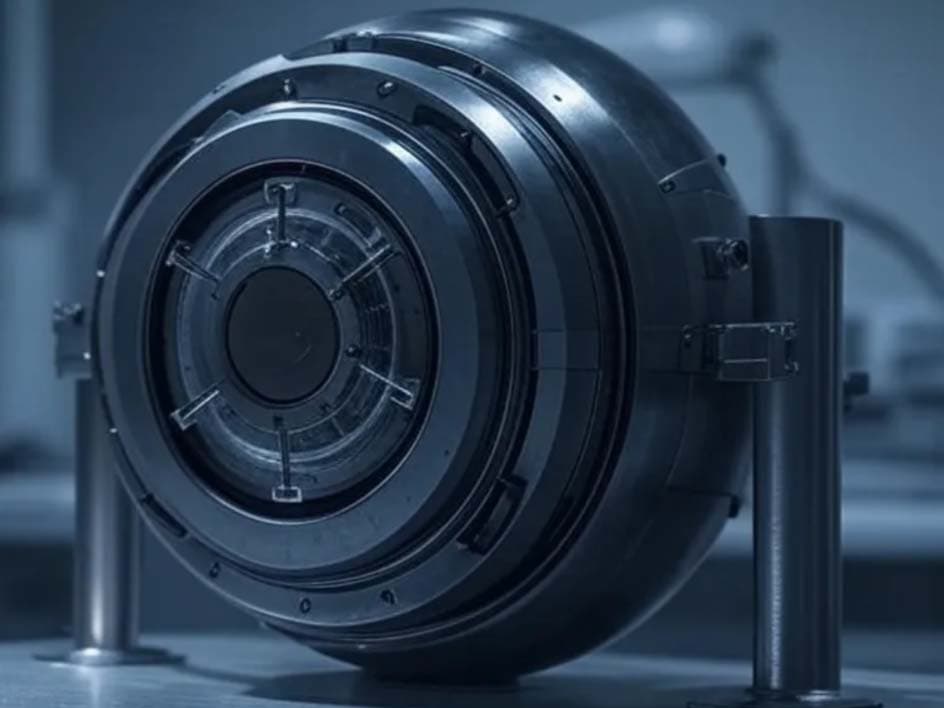
Specification for Dipole Magnetic Shield Generator (DMSG Module)
- Objective
- To design and construct a dipole magnetic shield capable of generating a controlled magnetic field to deflect charged particles or reduce external magnetic interference, suitable for use in spacecraft radiation shielding or sensitive experimental environments.
- General Description
- The dipole magnetic shield generates a magnetic field with a dipolar configuration, achieving a specified field intensity and uniformity. The shield is designed for high efficiency, durability, and compatibility with the operational environment (e.g., space or laboratory).
- Technical Specifications
- Magnetic Field Requirements:
- Field Intensity: Adjustable between 1 Gauss (0.1 mT) to 10,000 Gauss (1 T).
- Field Uniformity: Within ±5% in the specified operational zone.
- Field Shape: Dipolar configuration with adjustable orientation.
- Field Stability: Fluctuation < 0.01% over 24 hours.
- Operational Zone:
- Volume Coverage: Cylindrical zone with dimensions: Diameter 1.0 m, Length 2.0 m.
- Shielding Effectiveness: Reduction of external field interference by 90% within the operational zone.
- Material and Construction:
- Core Material: High-permeability alloys (e.g., Mu-metal) for guiding magnetic flux.
- Coil Type: Superconducting or copper-wound solenoids depending on application.
- Coil Cooling:
- Superconducting coils: Cryogenic cooling with liquid helium or closed-loop refrigeration.
- Copper coils: Forced-air or liquid cooling.
- Encapsulation: Non-magnetic, high-strength composite materials for structural support.
- Power Supply and Control:
- Input Voltage: 110V/220V AC or 24V DC (configurable).
- Current Requirements: Adjustable up to 200A depending on field intensity.
- Control System:
- Digital interface with real-time monitoring.
- Programmable field intensity and polarity.
- Remote operation capability via Ethernet or wireless.
- Thermal Management:
- Heat Dissipation: Active thermal management with thermal sensors and redundant cooling mechanisms.
- Operating Temperature Range: -50°C to 60°C (ambient).
- Environmental Durability:
- Radiation Hardness: Withstands ionizing radiation up to 100 krad.
- Withstands Static magnetic fields: Requires shielding with high magnetic permeability materials like permalloy, mu-metal, or nanocrystalline grain structure ferromagnetic metal coatings.
- Low-frequency magnetic fields (ELF): 300 Hz to 3 kHz, requires shielding with materials like steel or stainless steel.
- Radiofrequency (RF) electromagnetic radiation: Requires shielding with conductive materials like copper, brass, nickel, silver, steel, or tin.
- Extremely low frequency (ELF) electromagnetic radiation: 3 Hz to 300 Hz, requires shielding with materials like steel or stainless steel.
- Optical radiation: Includes visible and near-ultraviolet electromagnetic radiation, which may induce photochemical reactions or accelerate radical reactions.
- Vibration Resistance: Operates under vibration up to 20g (space-rated).
- Vacuum Compatibility: All materials and components suitable for high vacuum (10^-6 Torr).
- Magnetic Field Requirements:
- Performance Metrics
- Magnetic Field Precision:
- Field alignment accuracy: ±1 degree.
- Response time to change settings: < 0.1 seconds.
- Energy Efficiency: Power consumption under 5 kW at maximum field intensity.
- Lifetime: Minimum 10 years with less than 5% degradation in performance.
- Magnetic Field Precision:
- Integration Requirements
- Structural Interface: Mounting points compatible with standard spacecraft or laboratory platforms.
- Electrical Interface: Standardized connectors and interface protocols (e.g., RS-485, CAN bus).
- Safety Features:
- Automatic shutdown in case of overheating or current overload.
- Shielding of stray magnetic fields to prevent interference with nearby equipment.
- Testing and Validation
- Factory Acceptance Test (FAT):
- Verify field intensity, uniformity, and stability.
- Measure thermal performance and cooling efficiency.
- Site Acceptance Test (SAT):
- Confirm functionality in operational environment.
- Validate integration with external systems.
- Endurance Test: Continuous operation for 1000 hours under maximum field settings.
- Factory Acceptance Test (FAT):
- Documentation and Deliverables
- Full technical drawings and 3D CAD models.
- Operation and Maintenance Manual (OMM).
- Test Reports from FAT and SAT.
- Compliance Certificates (e.g., ISO 9001, space certification).
- Applicable Standards
- IEC 61000 for electromagnetic compatibility.
- NASA or ESA standards for space-rated components.
- ANSI/ASME standards for mechanical construction.
- Additional Notes
- Optional features like automated alignment systems and additional shielding layers can be provided upon request.
- Adaptations for specific environments (e.g., underwater or extreme temperatures) are available on a custom basis.
Tags
#magnetic shield#dipole generator#magnetic field control#radiation protection#space shielding#electromagnetic interference#magnetic flux#superconductivity
Quick Info
Category
AerospaceDate
February 2025
Key Technologies
magnetic shielddipole generatormagnetic field controlradiation protection
Interested in this invention?
Get in touch to learn more or discuss collaboration opportunities.
Contact Us